

Zdravím Ťa, milá angličtinárka, milý angličtinár, verím, že sa máš dnes skvele a približuješ sa k svojmu anglickému cieľu.
Dnešný blog je prepis – transcript podcastovej epizódy Cestovateľské denníky, ktorú nájdeš na Spotify pod názvom Prakticky anglicky alebo tu nižšie.
Má slúžiť ako pomôcka pri počúvaní pre lepšie porozumenie a v prípade, že by si nerozumel/a nejaké anglické slovíčko a chcel/a si ho dohľadať a preložiť, tu vidíš, ako sa píše. Tiež tu nájdeš fotky z mojich ciest.
Sama veľmi rada počúvam o dobrodružstvách v krajinách okolo sveta, a preto som sa rozhodla priniesť niečo obdobné aj Tebe. Epizóda je nahovorená v anglickom jazyku a dozvieš sa v nej o mojej dovolenke v Japonsku. Tiež Ti radím si itinerár skopírovať, lebo naplánovať trip do tejto krajiny bolo šialené! Verím, že Ti poslúži ako inšpirácia na Tvoje budúce cesty.
CESTOVATEĽSKÉ DENNÍKY:
Z PLÁNOVANIA JAPONSKA TI BUDE ŠIBAŤ … JEDINE, ŽE SI UKRADNEŠ MÔJ ITINERÁR
PODCAST VERZIA
PREPIS/TRANSCRIPT
Public Transport Chaos
First, prepare for chaos in public transport. So many people! But don’t worry – everything is nicely marked, and Google Maps is your best friend. We got lost just once, as far as I remember. You need one card for trains, buses, and the metro: the ICOCA card. Easy-peasy, no trouble.
Except for Shinkansen and some other express trains – you’ll need a separate ticket for those. And yes, the Shinkansen is really fast. You might be asking about the Shinkansen travel pass. Not really worth it. We personally spent less money travelling without it.
Osaka
Our first stop. We flew into Osaka first with a layover in Beijing, China, with Air China, the airline. We saw some negative reviews beforehand, but honestly, it was an average, normal experience. The only problem we had was with check-in. Their check-in webpage didn´t work, but you could check in directly at the airport or call them to secure the seats you wanted, which is what I ended up doing. So yes, I called Air China, but it was fine.
Fun fact: from Osaka´s airport, you go on a Hello Kitty train to the city centre, so magical.
My first dinner in Osaka was a cold udon soup with ice … yeah! Be careful what you order. I mean, it was tasty, but what I needed at the time was a hot soup, not an icy one.
So, what can you see in one night and one afternoon in Osaka?
The biggest attraction is definitely Dotonbori Street – neon lights, crazy food, giant crab signs. Perfect for photos and snacks. We were amazed by the Japanese streets and style, enjoying every bit of the first vibes of Japan.
Osaka Castle – a classic Japanese castle with a great park around it. You can take a walk, grab some drinks from the vending machine and enjoy the atmosphere.
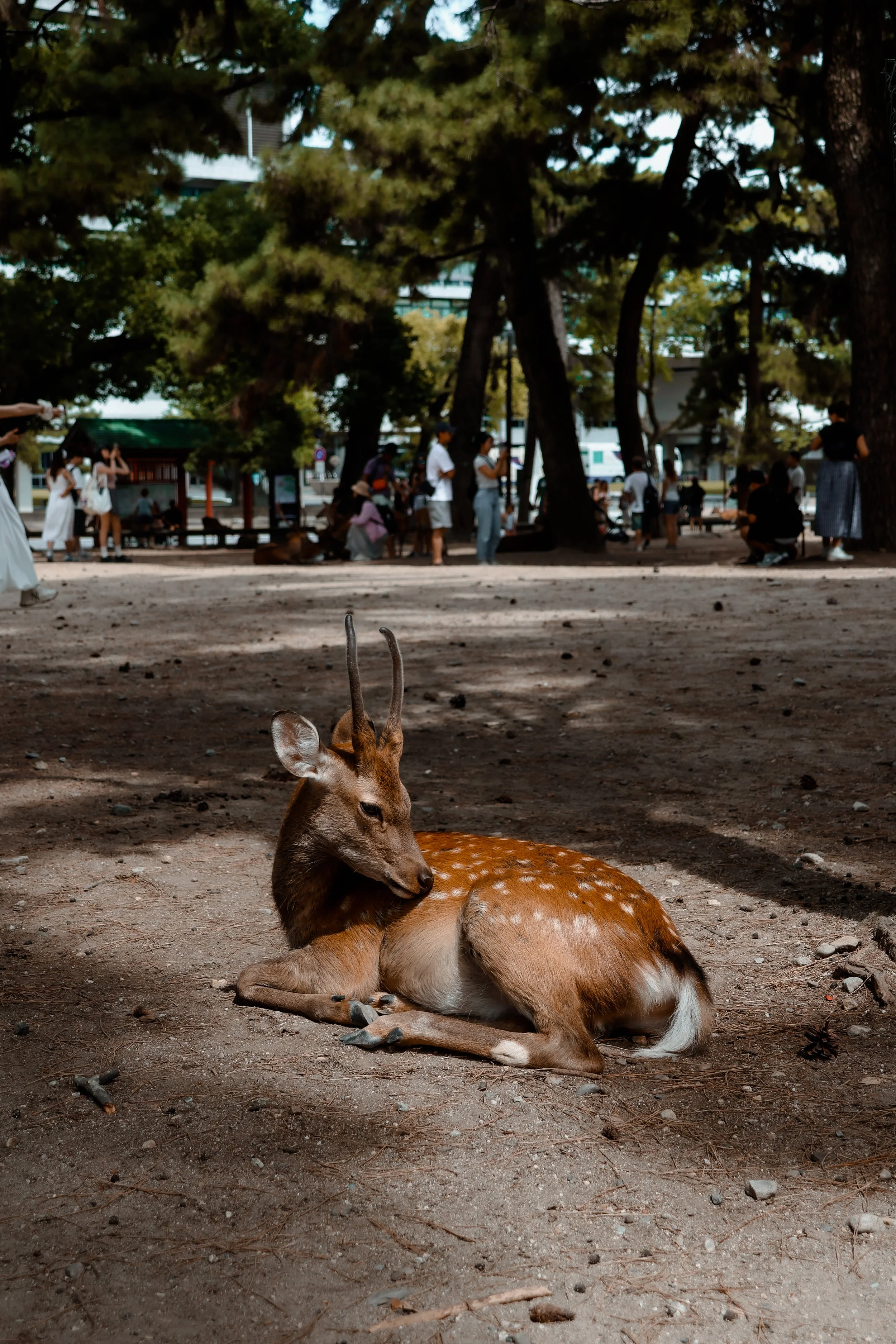
From Osaka, we took a train to Nara to see the deer park. It is right by the train station. You have for sure seen the viral videos with deer walking around freely; you can feed them with special crackers, but you gotta be careful and hide them because they will bite you to get to them. It definitely was a unique experience.
In Osaka, I also fell in love with Japanese Seven-Eleven. Seriously, go try everything – especially egg sandwiches, chiffon cake … don’t leave without it! Also, all my Seven-Eleven drink dreams came true. I was mixing everything like crazy. If you know, you know, check TikTok.
Miyajima
Next stop: Miyajima – a small island famous for its giant floating Torii gate. If you don't know what a Torii gate is, I recommend you just check it on Google. You gotta take a boat to get there. It was raining when we came, which was a bit disappointing at first. I was kinda bummed about it, but then the vibe hit. The island was misty and gloomy, and the green plants were greener than usual. So, it was a great experience in the end.
On the island, don’t miss:
Itsukushima Shrine (svätyňa) – the shrine on the water, especially beautiful at high tide (príliv).
Again, deer roam/walk freely in the streets. We saw a giant one just sitting right on the doorstep of a shop. Fun fact: one of them started chewing - eating my sister's rain poncho. So just be careful.
Daishion - a Buddhist temple complex, you gotta walk up a few flights of stairs. It was definitely worth it. It was just beautiful.
A hike up or a cable car ride up Mount Misen for views, which we didn´t end up doing as we came in quite late.
Accommodation Tip: Book your hotels near the train station. I think that is the best thing you can do. So convenient when you are city-hopping (travelling from one city to another).
Hiroshima
If you want to go to Miyajima, I recommend staying in Hiroshima, take the trip, and the next day you can visit Hiroshima Peace Memorial, also called Atomic Bomb Dome. So you know that they had experienced this tragedy in the past, so this is sort of a museum, I would say, about what happened and the aftermath of what happened and some information about developing nuclear weapons and bombs. It’s a moving place to learn about history, peace, and resilience. Also check: Peace Memorial Park – you can see some monuments there, fountains, and the Children’s Peace Statue. I think that is the biggest “attraction” in Hiroshima.
And also like Osaka, most bigger cities have their own castles. Hiroshima has a smaller one in comparison with Osaka's castle, but still nice to see.
Shukkeien Garden is a historic 17th-century Japanese garden perfect for a chill walk to cool down a little bit with a central pond, teahouses, islands, and bridges. It was a nice spot to relax from the heat. FYI (for your information): We were there in September, and it was scorching hot.
There was a Pokémon shop at the station, so obviously my sister and my boyfriend needed to visit.
I gotta say that all the hotels we booked were really clean, relatively cheap and well-equipped, even with things that are not as usual, such as toothbrushes and toothpaste, for example.
Fun fact: I rarely sit down on the toilet in public places, but in Japan, the toilets were incredibly clean. The toilet culture here is just out of this world, honestly. And the toilets themselves have so many different functions that you can use. When we first came, the real issue was how to actually flush the toilet (spláchnuť).
Kyoto – My Favourite!
Kyoto was my favourite city of all. Don’t miss:
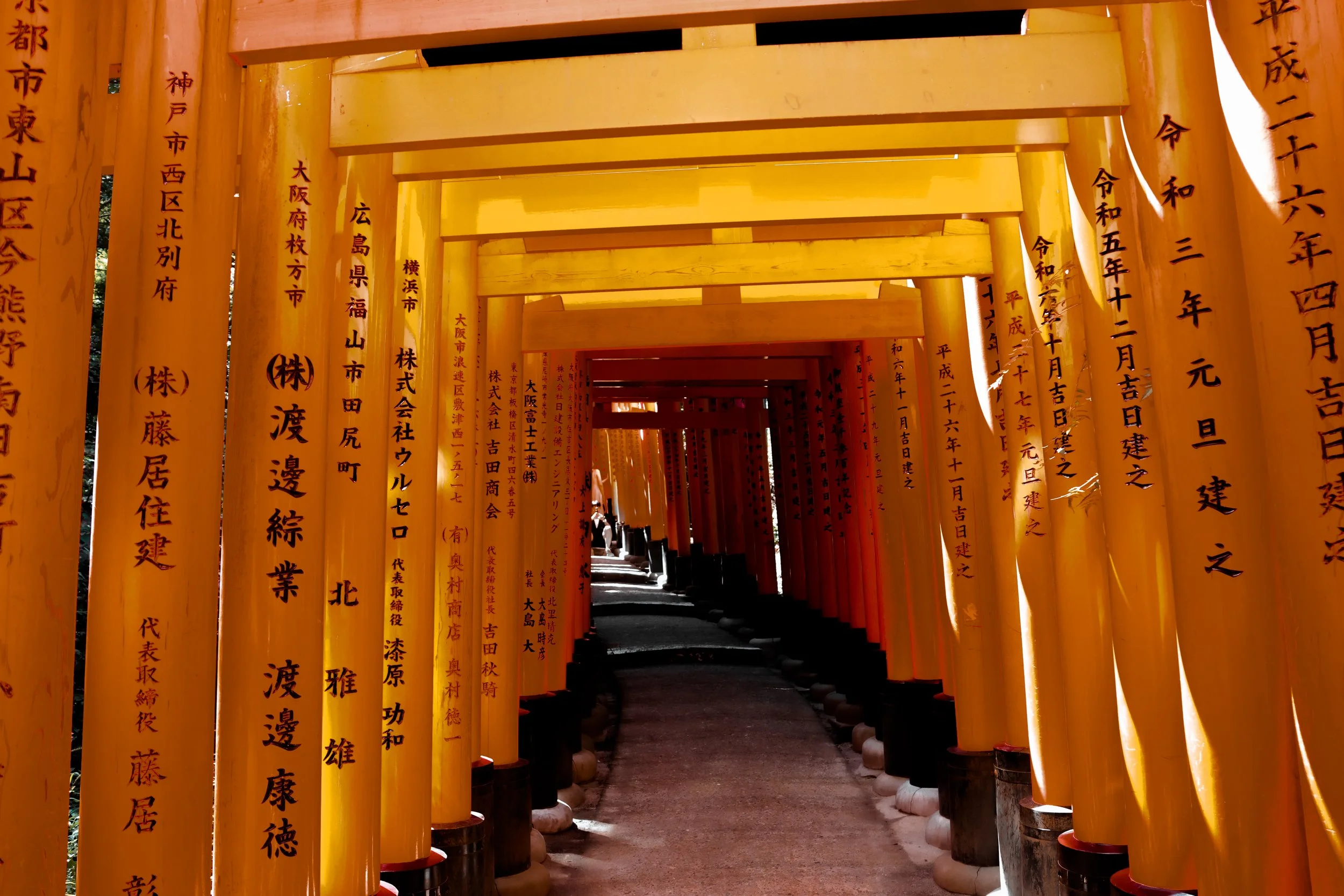
Fushimi Inari Shrine – thousands of red torii gates, Instagram heaven. Many people are at the entrance, but when you walk further up, they disperse, and it is much calmer.
Arashiyama Bamboo Forest was a little bit of an overkill because of all the people. What was really nice, though, was Arashiyama Monkey Park Iwatayama (very close to the bamboo forest), where you could observe monkeys up close.
Kinkaku-ji (Golden Pavilion) – shiny, stunning, iconic, a short walk around the garden. A very nice photospot.
Ninenzaka and Sannenzaka are historic, pedestrian-only (walking-only) sloping streets; they go up-hill and down-hill. They are famous for traditional wooden buildings, tea houses, and shops.
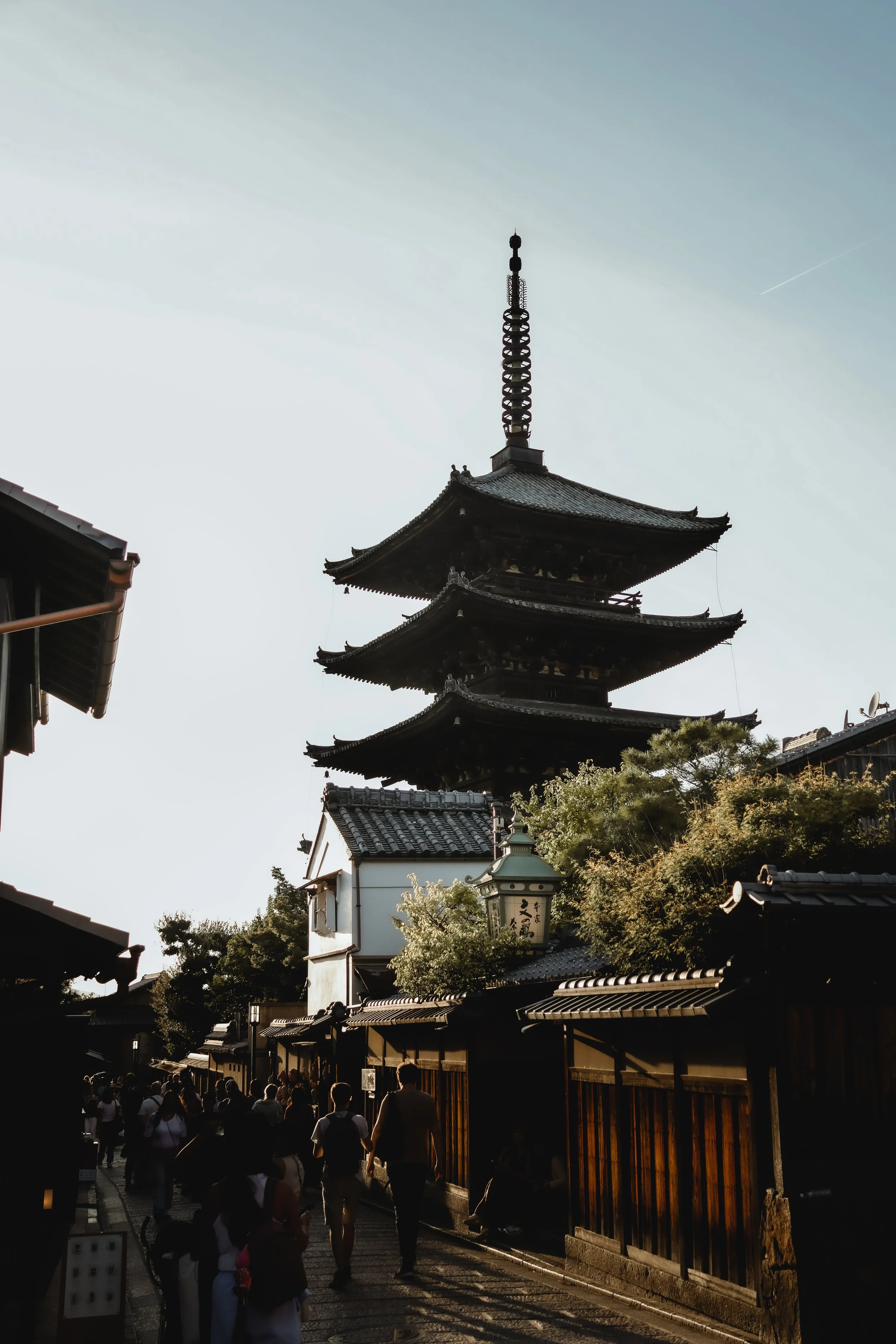
Key activities include visiting the nearby Kiyomizu-dera Temple, which we visited at sunset, just before closing, and it was simply magical.
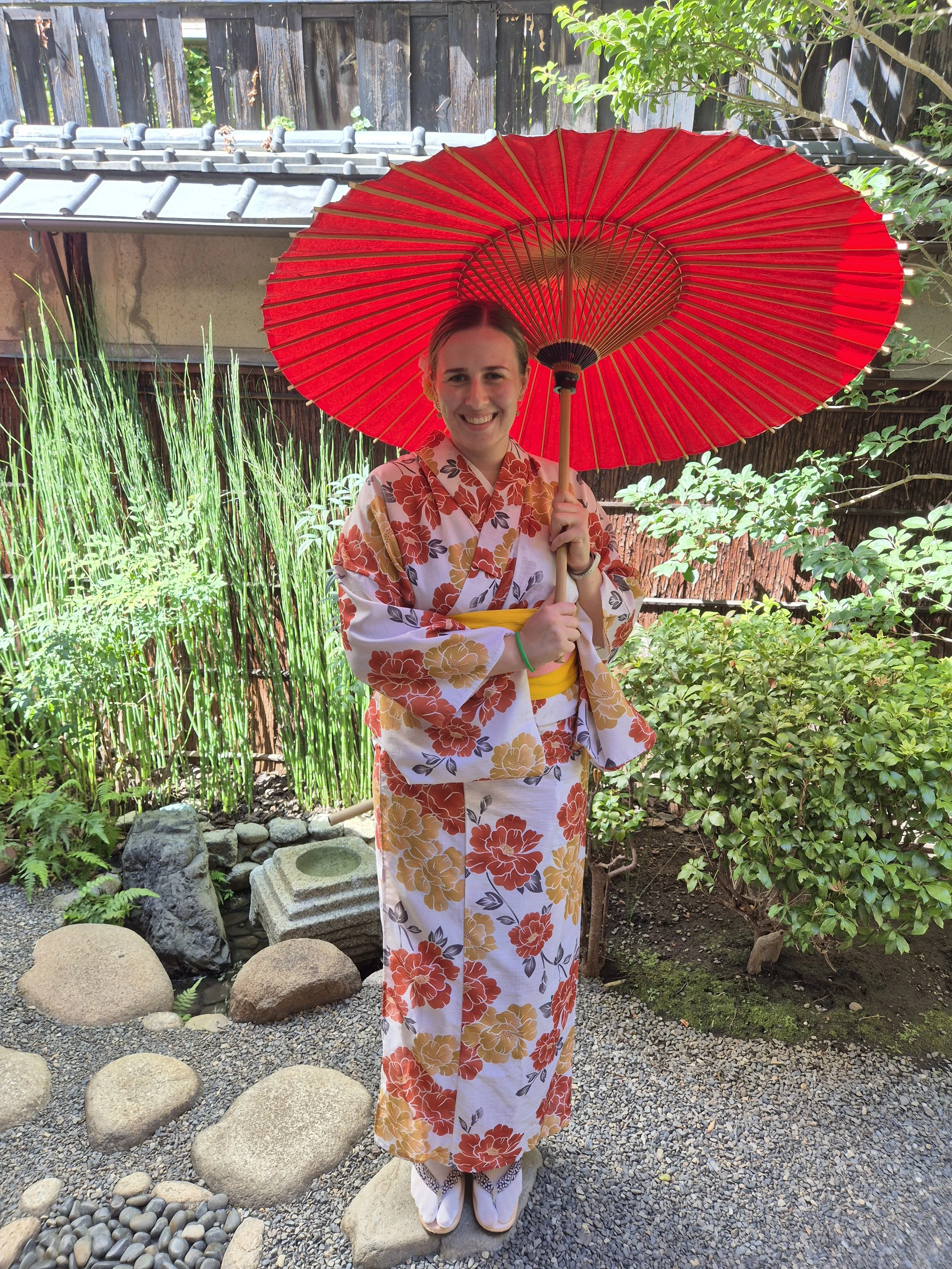
We even had a kimono experiencewith a tea ceremony, even though it is a largely touristic activity, I loved every bit of it. We got the chance to taste matcha, which I personally don´t enjoy, and Japanese sweets. My favourite one was a cinnamon triangle filled with bean paste - Yatsuhashi. It is like mochi if you know it, but a different shape. Mochi is a little ball and this is more like a triangle. You also have different flavours, from which we enjoyed the cinnamon one and tried a strawberry one as well. You cannot buy them everywhere, so if you see a shop with them, take them with you.
Kawaguchiko & Mt. Fuji
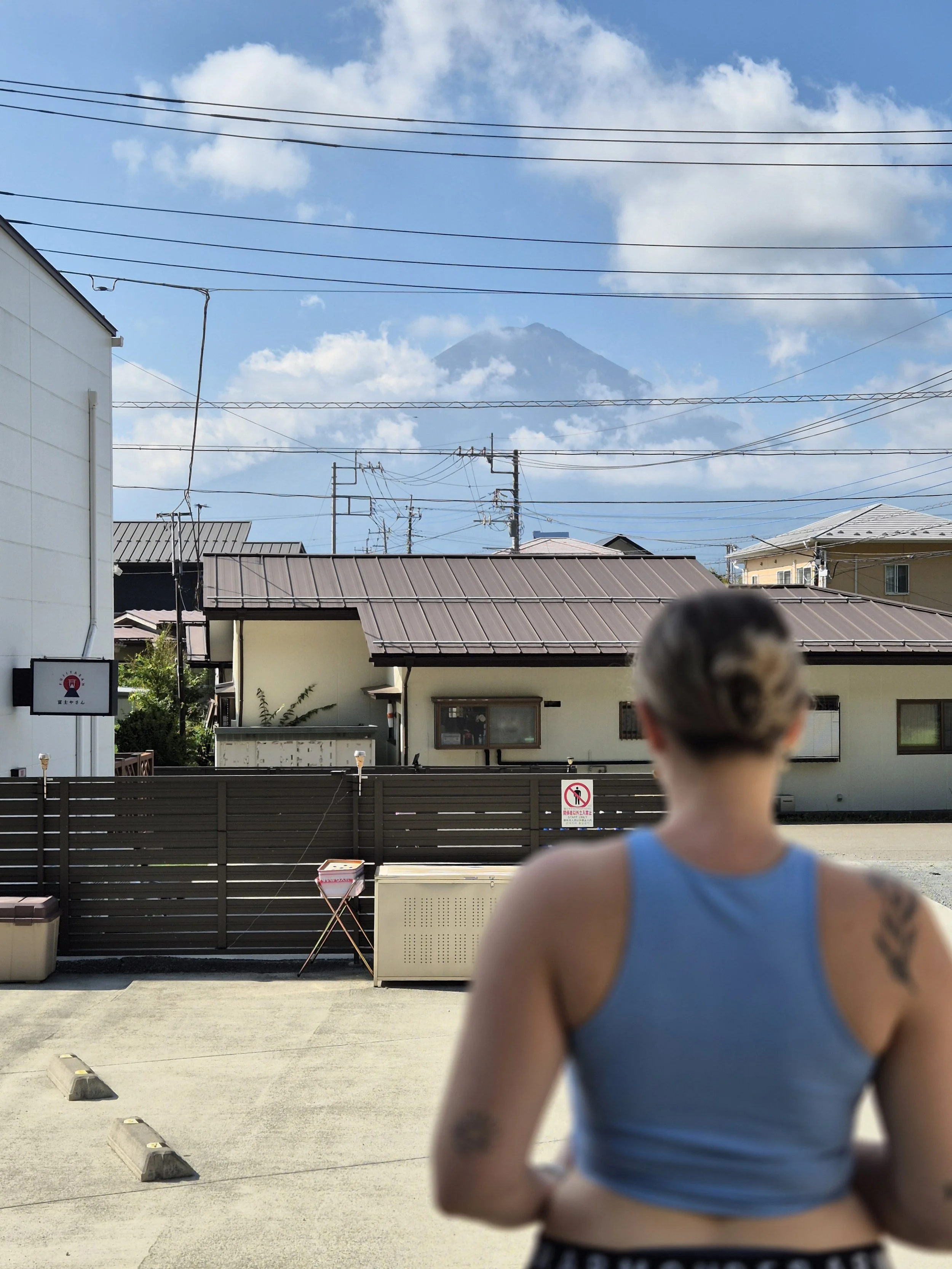
We spent a few nights in Kawaguchiko, under Mt. Fuji. There is also a famous lake called Kawaguchi. Fun story: we only saw Fuji at the very end of the day after visiting all the main viewpoints, then we randomly saw it when we were on the bus. Anyway, we got lucky because you can actually see it 70 to 80 days per year, only. What I wasn´t really happy about was the fact that after sundown, there were literally thousands of spiders everywhere. Not nice.
Must-sees:
Lake Kawaguchi, which you can see from a nice viewpoint Mt. Fuji Panoramic Ropeway. You are supposed to see Fuji from this viewpoint.
An amusement park - a bunch of rides and rollercoasters.
Chureito Pagoda - a temple like our church, oh gosh, so many stairs, but the view, if only Mt. Fuji would have shown up.
Oshino Hakkai Village - a scenic tourist area with crystal clear ponds and fish, with markets offering fresh fruit, ice cream, and souvenirs. A nice walk to finish the day.
BTW - most of the time we were using the public transport, but in this area, around Kawaguchiko, you gotta use Uber because the buses don't run so frequently.
Onsen experience is also widely popular, but we couldn´t do it because of our tattoos (it was too much of a hassle). If you don´t know it, they are hot springs used for bathing, like our spa and sauna. There are two types - you have a fake/artificial Onsen, and then you have a real Onsen with a real hot spring from the Earth. We wanted to do the real one.
Also, my sister was collecting stamps everywhere, idk if you know, but it is a thing in Japan, these stamps - pečiatky, can be found at train stations and different attractions, so we had to plan around that too because she was obsessed.
And yes, I did not tell you, I was there with my boyfriend, with my sister and with my parents. It was like a family holiday.
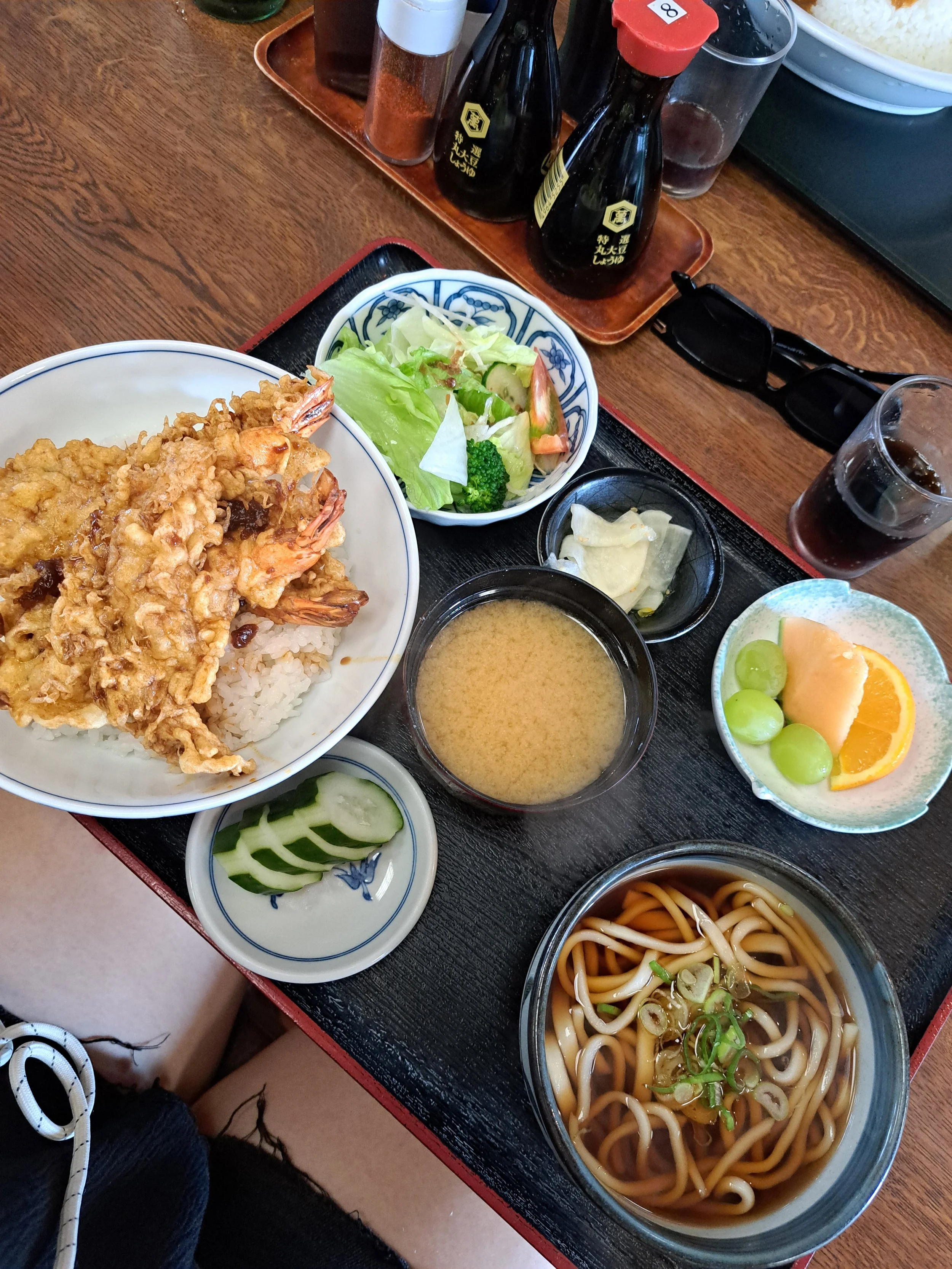
Local food was delicious and cheap, as expected. Ramen? We drank it by the litre. However, we didn´t come across any sushi restaurants, which was weird.
Tokyo
Final stop - Tokyo – maybe fewer nights next time. Highlights:
Sensō-ji is Tokyo’s oldest and most iconic temple, a massive complex. We had a hotel right at the corner - super convenient. Right outside, there are local markets, where I bought my souvenir chopsticks - paličky. I have 2 sets - Hello Kitty one and Mount Fuji at sunset. A very nice souvenir to take home with you.
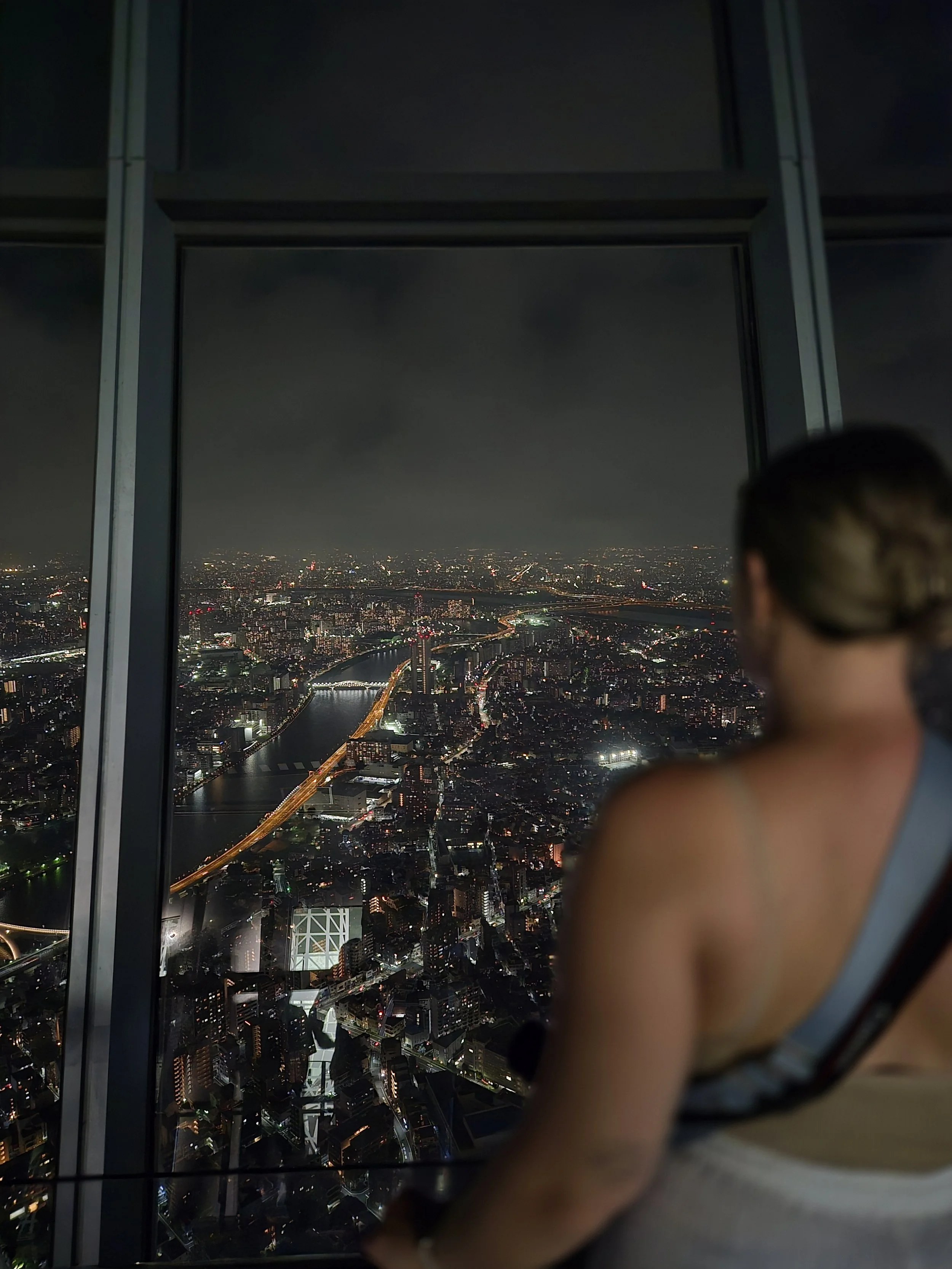
Skytree Tower – my first time on such a tall building at night, stunning views.
Shibuya Crossing – prechod pre chodcov - the busiest intersection in the world, total chaos. Honestly, I don´t know why it is so famous.
Don Quijote – (around the corner of Shibuya Crossing), a huge, crazy store with everything you never knew you needed. It was a never-ending shop; it sucked the soul out of me.
TeamLab Planets – immersive digital art, a must-see. Popular on Instagram.
Sumo show – a very interesting cultural experience with dinner and some facts about sumo fights, techniques and diet. I really enjoyed it.
Life Safety Learning Centre – a hands-on museum or an experience where you can learn about earthquakes, fires, and other emergencies. You even get to practice real-life drills, which is what we did. So, I can say that I experienced an earthquake like a very strong one, not a real one, but on something like a trampoline, but still. We were inside, and it was shaking, with different intensities and levels. Also, what it would feel like outside and inside. Super cool. It was all in Japanese. I mean, I think there are some life safety learning centres which are also in English. I don't speak Japanese, but the guide showed some pictures and videos, and we understood pretty well what it was about.
I gotta say that everything in Japan works and is thought through, from the toilet experience to butter being pre-cut for you. You will be surprised how things can work well and be so conveniently designed to make your life as easy as possible.
FOTOREPORT
ZHRNUTIE
Tak čo načerpal/a si inšpiráciu na Tvoje ďalšie cesty? Alebo si si aspoň poznačil/a novú slovnú zásobu?
Tak do ďalšieho čítania nabudúce, bye bye!
Tvoja lektorka Kika